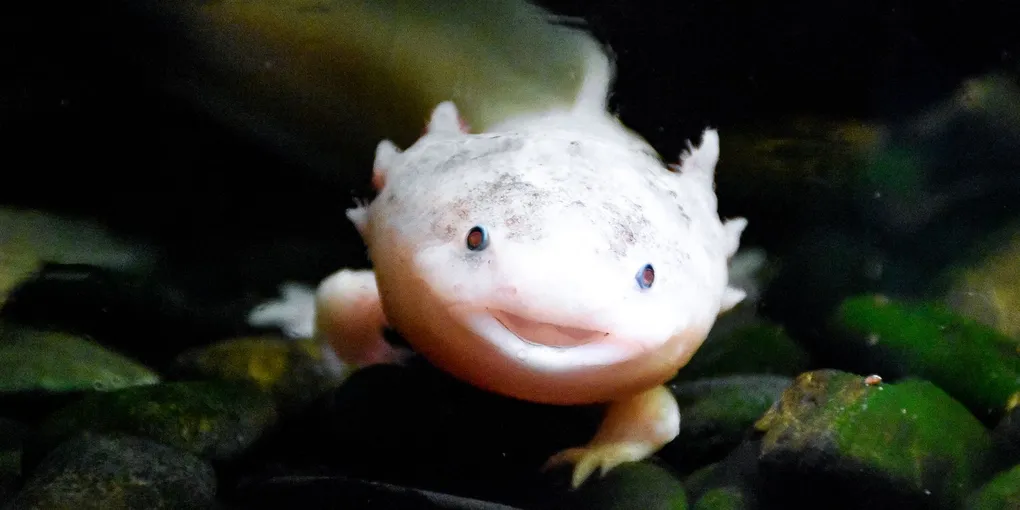
Why Is My Axolotl Floating? (And How to Fix It)
An axolotl that floats is telling you something is wrong. Here are the seven causes ranked by how common they are, with the exact fix for each one.
A floating axolotl is not just being lazy. It’s a body-language signal that something is off — sometimes minor, sometimes urgent. Most cases resolve in a few days with the right intervention. A few require immediate action.
Here are the seven causes, ranked from most common to most serious, with the exact fix for each.
First: Diagnose What Kind of Float It Is
Watch your axolotl for 5 minutes before doing anything. The type of float tells you the cause.
| Float type | Most likely cause |
|---|---|
| Tail-up, head down | Gas trapped in the gut (overfeeding) |
| Floating sideways at the surface | Severe gas, possible impaction |
| Drifting belly-up | Emergency: organ failure or severe poisoning |
| Floating but able to swim back down | Mild stress or minor gas |
| Stuck at surface, gills curled forward | Ammonia or temperature emergency |
| Active and eating but lighter than normal | Empty stomach with stomach gas |
The first three are increasingly urgent. The last three have specific water or stress causes.
Cause 1: Trapped Gas from Overfeeding (Most Common)
Probability: 60-70% of floating cases Severity: Mild Time to fix: 1-3 days
When axolotls eat too much, especially calorie-dense foods like pellets soaked in too much air, gas builds up in the digestive tract. The gas is buoyant. The axolotl floats.
Symptoms:
- Bloated belly, especially after a recent meal
- Tail-up posture
- Otherwise alert and responsive
- Water parameters test clean
Fix:
- Stop feeding for 2-3 days entirely
- Test water (ammonia, nitrite, temp) to rule out other causes
- Fridge the axolotl if it’s been floating more than 24 hours (see fridging section below)
- Resume feeding at half quantity once the axolotl is bottom-walking again
Prevention going forward: read the feeding schedule guide and cut back on portion size. Adults eat way less than people assume.
Cause 2: Constipation or Mild Impaction
Probability: 10-15% of floating cases Severity: Moderate Time to fix: 3-7 days
If the axolotl ate something hard to digest (oversized pellet, swallowed gravel, large piece of food) it can cause partial blockage. The blockage produces gas behind it.
Symptoms:
- Bloated belly that doesn’t pass after 48 hours
- No recent poop (axolotls poop within 24-48 hours of eating normally)
- Refusing food
- Mild floating, sometimes intermittent
Fix:
- Stop feeding completely
- Move to a fridge tub for 24-48 hours at 40-45°F (see fridging section)
- Return to tank if active, continue fast for another day
- Resume with one small earthworm — earthworms help clear the gut
- If still impacted after 5 days, an exotic vet is the next step
Prevention: never use gravel substrate. Use bare bottom or fine sand. Don’t feed oversized pellets — they should fit in the axolotl’s mouth in two bites.
Cause 3: Recent Water Change Shock
Probability: 5-10% of floating cases Severity: Mild Time to fix: 6-24 hours
If you did a large water change with water that was a different temperature, pH, or hardness, the axolotl can react by floating temporarily. This is stress, not damage.
Symptoms:
- Floating started within 24 hours of a water change
- Otherwise looks healthy
- Tank parameters look fine NOW (because you just changed the water)
- Gills may look pinker than normal
Fix:
- Don’t do another water change for at least a week
- Lower the room temperature to keep the tank cool
- Leave the axolotl alone — no feeding, no handling
- Recovery usually within 6-24 hours
Prevention: always temperature-match water-change water within 2°F. Use dechlorinator. Change 20-25% weekly, not 50% sporadically. Read the water parameters guide for the full routine.
Cause 4: Ammonia or Nitrite Poisoning
Probability: 10% of floating cases Severity: SERIOUS Time to fix: Hours to days, depending on severity
This is when floating becomes an emergency. Ammonia and nitrite damage the gills and central nervous system. Floating from poisoning often comes with gill curling and gasping at the surface.
Symptoms:
- Floating combined with gills curling forward
- Gasping at the surface
- Pale or red-streaked gills
- Refusing food
- Stuck at the surface or near the filter outflow
Fix:
- Test ammonia and nitrite immediately with a liquid test kit
- If either is above 0, do a 50% water change with dechlorinated water at matching temp
- Dose Seachem Prime at 5x the normal dose (binds ammonia for ~48 hours)
- Move to a clean tub if levels are above 1 ppm ammonia or 0.5 ppm nitrite
- Find the cause of the spike: uneaten food, dead matter, broken filter, interrupted cycle
- Recheck levels every 4-6 hours until back to 0
This is the second-most-common life-threatening floating cause. The full water parameters cheat sheet covers exact thresholds and emergency procedures.
Cause 5: Water Too Warm
Probability: 5-8% of floating cases Severity: SERIOUS Time to fix: Hours
Axolotls float when water temperature exceeds their tolerance. The metabolism speeds up, dissolved oxygen drops, and the axolotl tries to access surface air more frequently.
Symptoms:
- Floating combined with rapid gill movement
- Gulping at the surface for air
- Refusing food
- Slime coat looking thin or sloughing off
- Visible during summer or heat wave
Fix:
- Check water temperature now — should be below 68°F
- Cool immediately: ice packs in sealed bags floated in the tank, fan across the surface
- Move axolotl to a cooler tub while you cool the main tank
- Address the root cause: room AC, aquarium chiller, move tank away from heat source
Anything above 72°F is acute risk. Above 75°F is potentially fatal within 24-48 hours.
Cause 6: Stress (New Tank, Move, Loud Vibration)
Probability: 3-5% of floating cases Severity: Mild Time to fix: 1-7 days
After major life events — new tank, transport home, addition of decor, loud household — axolotls sometimes float as a stress response. It’s the body language equivalent of an axolotl sitting still and refusing to engage.
Symptoms:
- Floating started after a clear life event
- Water parameters are clean
- Otherwise no other symptoms
- Axolotl tucks gills back tight to the head
Fix:
- Reduce stress sources: dim the lights, cover the tank with a towel temporarily, stop tapping the glass
- Don’t feed until the axolotl is bottom-walking again
- Don’t handle, don’t move decor, don’t add tankmates
- Patience — most stress floating resolves in 3-7 days
Cause 7: Organ Failure or Late-Stage Illness
Probability: Under 2% of floating cases Severity: TERMINAL Time to fix: Often unfixable
In old or chronically stressed axolotls, the body’s ability to regulate buoyancy fails entirely. This is usually the end stage of a longer problem.
Symptoms:
- Drifting belly-up
- Unable to right itself
- Visible wasting, sunken belly
- Fungal patches, sores, or visible tumors
- Long history of chronic poor water quality
Fix: This is the case where a vet visit is the right answer, not internet advice. Find an exotic vet who handles amphibians. The vet may recommend supportive care or, if quality of life is gone, humane euthanasia (clove oil sedation followed by ice bath is the standard amphibian protocol).
The Fridging Procedure (When and How)
Fridging is the standard intervention for gas-induced floating that hasn’t resolved in 24 hours.
When to fridge:
- Floating from suspected gas or impaction
- Mild stress that isn’t resolving
- Pre-emptive cooling during summer if room temp is creeping up
When NOT to fridge:
- Ammonia poisoning (the cold slows recovery)
- Suspected infection or fungal disease
- Visible injury or bleeding
- Axolotls under 4 inches (too small, too risky)
How to do it:
- Prep a clean container — 5-quart food-grade plastic with a vented lid
- Fill with dechlorinated water matched to the tank’s current temperature
- Place container in the refrigerator (not freezer) at 40-45°F
- Move the axolotl in by gently scooping with a soft net or a cup
- Leave for 24-48 hours — no food, minimal disturbance
- Change the water daily (very important — no filter means waste accumulates)
- Return to tank by floating the container in the tank for 30 minutes to temperature-equalize
The cold slows the metabolism, lets gas pass, and resets stress. Most floaters recover within 48 hours of fridging.
When to Go to a Vet
Most axolotl problems including most floating cases resolve at home. But these signs need a vet:
- Floating combined with visible wounds, fungus, or tumors
- Floating that doesn’t resolve after 5-7 days of fridging + fasting
- Bloody discharge from the cloaca
- Inability to move at all (severe lethargy)
- Suspected internal blockage with visible bulge
Find an exotic vet who specifically handles amphibians. Most regular vets won’t know what to do with an axolotl.
The Diagnostic Order
When you notice your axolotl floating, run through these questions in order:
- Did you just feed? → Most likely gas, fast for 2-3 days
- Did you just change water? → Most likely shock, wait it out
- What does the water test say? → If anything is off, fix that first
- What temperature is the tank? → Above 70°F is suspect
- When did the axolotl last poop? → If over 3 days, possible impaction
- Are there visible wounds, fungus, or color changes? → If yes, this is illness territory
Eighty percent of cases are answered in steps 1, 2, or 3.
Prevention (The Long View)
Floating happens far less often in tanks where:
- Water parameters are dialed in (see the parameters guide)
- Feeding is conservative (see the feeding schedule)
- Substrate is bare bottom or fine sand only (no gravel — read the tank setup guide)
- Temperature stays consistently in the 62-65°F sweet spot
- Water changes happen weekly at small volumes (20-25%)
Get those five things right and you’ll go years without a floating incident.
The Bottom Line
Most floating axolotls are dealing with overfeeding or minor water-quality issues. Stop feeding, test the water, consider fridging. If you’re seeing more serious symptoms (gill curling, surface gasping, belly-up drifting), that’s emergency territory and you act fast.
The good news: axolotls are tough. The bad news: when they show distress, the cause is usually our setup, not them.
For the rest of the new-keeper essentials, the start here walkthrough and food safety database cover the daily routine that prevents most of these problems in the first place.
Newsletter
The weekly axolotl note.
One honest care note, one Amazon find, one beginner question answered. Sundays. No spam.
Disclosure: The Axolotl Guide is a participant in the Amazon Services LLC Associates Program, an affiliate advertising program designed to provide a means for sites to earn advertising fees by advertising and linking to Amazon.com. As an Amazon Associate we earn from qualifying purchases, at no extra cost to you.
More Health & Behavior Guides
Are Axolotls Nocturnal? (What They Actually Do at Night)
Axolotls are crepuscular, not strictly nocturnal. They're most active at dawn and dusk, active at night, and rest during the day. Here's the full activity pattern.
Axolotl Fungus (Saprolegnia): How to Recognize and Treat It
White cotton-like growth on axolotls is Saprolegnia fungus. Catch it early and salt baths cure it in 5-7 days. Here's the complete treatment protocol.
Do Axolotls Bite? (Yes, And Here's What That Means For You)
Axolotls bite anything that looks like food, including your fingers. The good news: axolotl bites are harmless to humans. The bad news: their bites cause real damage to other axolotls.