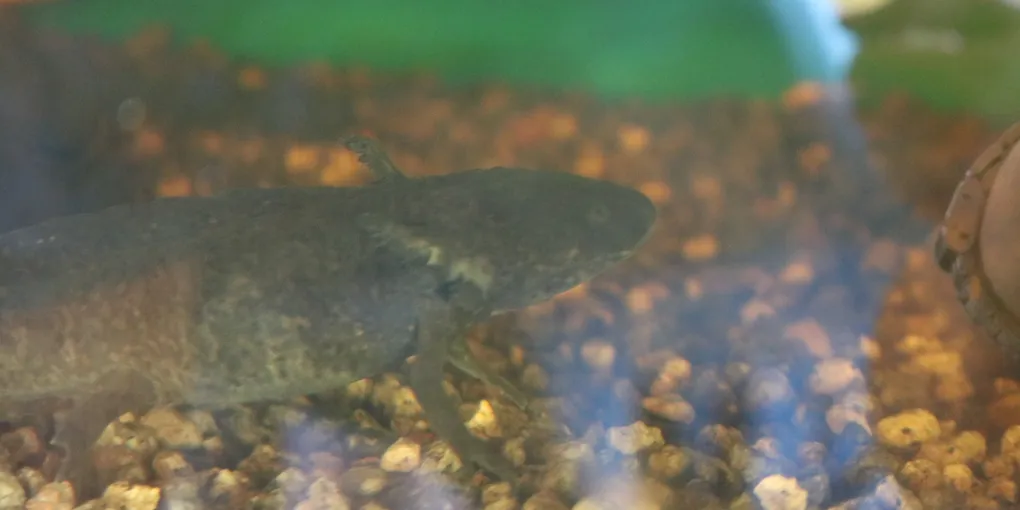
Axolotl Water Change: How Much, How Often, and Exact Steps
Weekly 20-25% water changes are the standard. Full guide to axolotl water changes: exact procedure, tools, timing, and what NEVER to do.
Weekly water changes are the single most important axolotl care task. Skip them and nitrate accumulates until the axolotl gets sick. Overdo them and you crash the bacterial cycle. Here’s the exact protocol that keeps water quality perfect without disrupting anything.
The rule: 20-25% weekly
For most tank sizes, one weekly partial water change of 20-25% is ideal. Some experienced keepers split this into two smaller mid-week changes instead — the total water refresh per week is what matters, not the frequency.
Tank size cheat sheet:
| Tank size | Weekly water change amount |
|---|---|
| 10 gallon | 2-2.5 gallons |
| 20 gallon long | 4-5 gallons |
| 29 gallon | 6-7 gallons |
| 40 gallon breeder | 8-10 gallons |
| 55 gallon | 11-14 gallons |
| 75 gallon | 15-19 gallons |
For a full breakdown by tank size see tank size guide.
What you need
- Gravel siphon / aquarium vacuum ($15-25) — for removing water and vacuuming substrate
- Two 5-gallon buckets (dedicated to aquarium use only — no soap residue)
- Seachem Prime water conditioner ($18 — lasts months)
- Digital thermometer — one in the tank, one probe for checking prep water
- A tap or hose access for filling the new water bucket
- Optional: a Python or Aqueon water changer for larger tanks (makes it easier)
Never use a bucket or siphon that’s been used with soap, bleach, or any household cleaner. Even trace residue kills axolotls.
The step-by-step protocol
Step 1: Test water before (2 minutes)
Before you touch anything, test:
- Ammonia (should be 0 ppm)
- Nitrite (should be 0 ppm)
- Nitrate (should be under 20 ppm ideally)
- pH (should be 7.4-7.6)
This gives you baseline data. If ammonia or nitrite show anything above 0, do a larger 40-50% change instead of the standard 20-25%. That’s an emergency, not a routine change.
For target parameters, see water parameters cheat sheet.
Step 2: Prep the replacement water (5 minutes)
Fill your clean bucket with 5 gallons (or whatever your target amount is) of cool tap water. Aim for temperature within 2°F of the tank.
Add Seachem Prime:
- Standard dose: 1 drop per gallon (or follow bottle instructions)
- Stir gently to distribute
Let it sit for at least 5 minutes so the dechlorinator fully binds chlorine.
Check temperature again before adding to the tank.
Step 3: Siphon and vacuum (10 minutes)
Place the gravel siphon in the tank, get flow started, and drain into your second (empty) bucket.
As you siphon:
- Push the siphon into the substrate — waste and debris get pulled up while sand stays behind
- Focus on visible waste, uneaten food, and detritus in corners
- Vacuum one-third of the substrate per week and rotate zones — don’t try to clean all substrate at once
- Stop when you’ve removed your target 20-25% volume
Your axolotl doesn’t need to be removed for this. Just avoid pointing the siphon directly at them and give them space to move away if they want.
Step 4: Wipe glass (2 minutes)
Use a magnetic algae scraper for inside glass, and a damp clean cloth (no soap) for outside glass. Don’t disturb the axolotl unnecessarily.
Algae buildup on axolotl tanks is usually minimal because axolotls need dim lighting anyway. This step is often “wipe once and done.”
Step 5: Refill (5 minutes)
Slowly pour the prepared water back in. Two techniques:
- Slow pour method: Use a smaller cup to gently ladle water in
- Plate method: Place a small plate at the water surface and pour onto it — diffuses flow
Never pour directly on the axolotl or the filter intake. Water hitting the axolotl at speed stresses them.
Step 6: Verify (2 minutes)
- Watch the axolotl for 5 minutes for stress signs (glass surfing, gill curling)
- Check temperature stabilized within target range
- Observe filter is still running and hasn’t been disrupted
You can retest parameters if you want, but if you followed the protocol above, they’ll be fine.
Total time: about 25 minutes.
What NOT to do
Common mistakes that hurt the tank:
- Never rinse the filter in tap water. Chlorine kills the beneficial bacteria you’ve spent weeks cultivating. Filter maintenance = squeeze in OLD tank water only.
- Never do 50%+ changes as routine. Crashes the cycle. Reserve for ammonia emergencies.
- Never use hot water to speed up temp matching. Hot water leaches metals from copper pipes.
- Never add all new water at once. Slow and steady prevents temperature shock.
- Never do a “deep clean” that replaces substrate and cleans the filter same day. Bacterial colonies live in both places — losing both at once triggers a mini-cycle.
Emergency water changes
Sometimes you need to do a larger, faster change:
Ammonia spike (over 0.5 ppm)
- Immediately do a 40-50% change with dechlorinated, temp-matched water
- Dose Seachem Prime at 5x normal (binds ammonia for 48 hours)
- Retest in 12 hours
- Repeat 25% change if ammonia still above 0.25 ppm
- Find the cause: overfeeding, dead matter, uncycled tank
For the full water quality emergency response, see why is my axolotl floating.
Nitrite spike (over 0.25 ppm)
Same treatment as ammonia — 40-50% water change plus Prime dose. Prime binds nitrite too.
Nitrate accumulation (over 60 ppm)
Do 25% changes daily for 3 days rather than one big 75% change. Reduces gradually without shocking the axolotl.
Temperature emergency (over 72°F)
Water change won’t cool the tank fast enough. Use ice packs in sealed plastic bags floated in the tank while you do a 25% water change with cool (60°F) prepped water.
Water change routines that work well
Different keepers have different approaches. All of these work:
- Sunday morning, 25% change, weekly — classic, easy to remember
- Monday and Thursday, 15% each, twice weekly — smaller impact, more consistent
- Every 5 days, 20% change — steady rhythm without weekly stress
- After each feeding day, small 10% top-off — for keepers who feed heavily
Pick the one that fits your schedule. Consistency matters more than exact timing.
Signs you need MORE frequent changes
- Nitrate consistently above 40 ppm despite weekly changes → move to 30% weekly or 2x per week
- Cloudy water within 3-4 days of a change → too much waste, maybe overfeeding
- Persistent low-level ammonia readings → cycle is compromised, need investigation
Signs you’re changing too much
- pH drifting after each change → new water is very different from tank water, ease off
- Axolotl showing stress after every change → your temperature or dechlorination isn’t consistent
- Bacterial cycle instability → too much change too fast, back off to smaller amounts
Related routines
Water changes are one part of the weekly axolotl care rhythm. For the full routine, see:
Bottom line
Weekly 20-25% water changes with dechlorinated, temperature-matched water. Never rinse filter in tap. Test before you change so you know what to expect. That’s it — 25 minutes a week keeps water quality perfect for 15 years of axolotl life.
Newsletter
The weekly axolotl note.
One honest care note, one Amazon find, one beginner question answered. Sundays. No spam.
Disclosure: The Axolotl Guide is a participant in the Amazon Services LLC Associates Program, an affiliate advertising program designed to provide a means for sites to earn advertising fees by advertising and linking to Amazon.com. As an Amazon Associate we earn from qualifying purchases, at no extra cost to you.
More Water & Temperature Guides
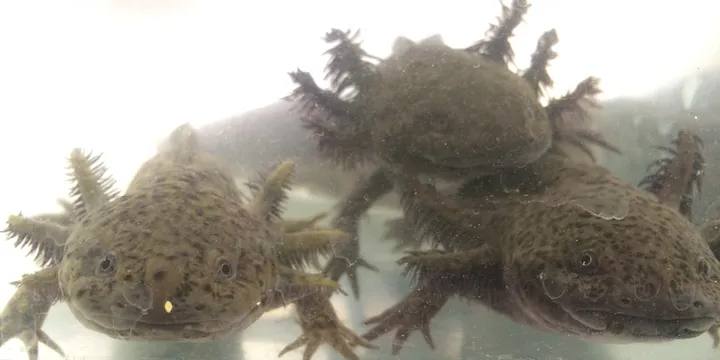
Do Axolotls Need a Heater? (The Honest Answer)
No, axolotls don't need a heater. They need a chiller. Axolotls want 60-68F, which is colder than most homes. Here's when you might need cooling, when not, and the rare case for a low-watt heater.
Axolotl Water Parameters: The Complete Cheat Sheet
Exact ranges for temperature, pH, ammonia, nitrite, nitrate, GH, and KH. What each one does, how to fix it when it's off, and the test kit that actually works.
Are Axolotls Nocturnal? (What They Actually Do at Night)
Axolotls are crepuscular, not strictly nocturnal. They're most active at dawn and dusk, active at night, and rest during the day. Here's the full activity pattern.