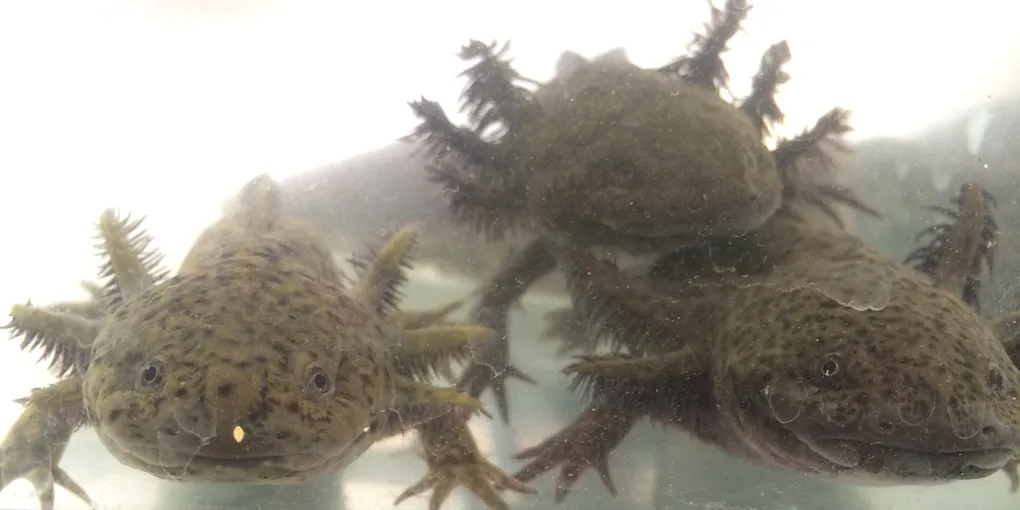
Do Axolotls Need a Heater? (The Honest Answer)
No, axolotls don't need a heater. They need a chiller. Axolotls want 60-68F, which is colder than most homes. Here's when you might need cooling, when not, and the rare case for a low-watt heater.
The short answer: no, axolotls don’t need a heater. They evolved in cold, spring-fed lakes in central Mexico, and they want water between 60 and 68°F. Most homes are warmer than that, which means most axolotl keepers need cooling, not heating.
But there are a few specific situations where a small heater is the right call. Here’s the full picture.
Why Axolotls Want Cold Water
Axolotls are native to Lake Xochimilco, a shallow lake fed by mountain springs. The water there sits at 60-68°F year-round. Their entire physiology evolved for that temperature range:
- Metabolism slows in cold water — they conserve energy, eat less, live longer
- Dissolved oxygen is higher in cold water — gill efficiency depends on it
- Slime coat is healthier in cold water — warm water encourages bacterial and fungal growth
- Immune system functions best at 62-68°F — gets suppressed at 72°F+
A warm axolotl is a stressed axolotl. Stress kills.
Temperature Ranges and What They Do
| Range | Effect |
|---|---|
| 50-58°F | Too cold for daily living. Slows metabolism dramatically. |
| 60-65°F | Sweet spot. Optimal for health and lifespan. |
| 65-68°F | Acceptable. Slightly faster metabolism, slightly shorter lifespan. |
| 68-70°F | Mild stress. Appetite reduces slightly. |
| 70-72°F | Chronic stress. Immune suppression begins. |
| 72-75°F | Acute stress. Refusing food, gills curling. |
| Above 75°F | Dangerous. Heat stroke. Death within days possible. |
For the full water quality picture, see the water parameters cheat sheet.
When You DON’T Need a Heater (Most People)
If your home meets any of these conditions, no heater needed:
- Room temperature 65-75°F most of the year — typical American home. You need cooling for summer, not heating for winter.
- You run central AC in summer — keeps room consistently 70°F or below. Use a fan across the tank surface for extra evaporative cooling and you’re set.
- Live in a temperate climate — anywhere coastal Pacific Northwest, Northern Europe, parts of the UK. Water stays cool naturally.
- Tank is in a basement — basements are consistently cooler than upstairs. Often perfect for axolotls without intervention.
For ~80% of axolotl keepers, the question isn’t “what heater do I need” but “how do I cool my tank in summer.”
When You DO Need Some Form of Cooling
If your home gets warm, cooling is critical. Options ranked by cost and effectiveness:
Option 1: Fan across the water surface (cheapest, $15-$45)
A small clip-on fan blowing across the water surface drops temperature 2-5°F via evaporation. Works great if your room is 70-72°F and you need it at 67-68°F.
The catch: it speeds up water evaporation, so you’ll top off the tank weekly with dechlorinated water. The shop page has the JBJ Arctica Cooling Fan for this purpose.
Option 2: Frozen water bottles (free, manual)
Drop sealed frozen water bottles (Gatorade bottles, etc.) into the tank during heat waves. Cycle 2-3 bottles in rotation, swapping every few hours. Drops temperature 3-7°F.
Cheap and effective for occasional heat waves. Tedious if you need it daily.
Option 3: Aquarium chiller ($250-$600)
A dedicated chiller is a small refrigeration unit that cools tank water via inline plumbing. Drops temperature 5-15°F reliably. Plug-and-forget for hot climates.
Worth it if:
- Your room consistently exceeds 75°F in summer
- You don’t run home AC
- You live in southern US, Mediterranean, southeast Asia, or Australia
Brands like Hailea (compact, residential) are the standard. See the chiller listing on shop.
Option 4: Aquarium AC in dedicated room
For multi-tank rooms in extreme climates. A window AC unit set to 65°F cools the entire room cheaply. Works but uses serious electricity.
When You DO Need a Heater (Rare)
A small heater is only the right call in these specific scenarios:
Scenario 1: Unheated room drops below 55°F regularly
Some keepers in cold climates have garages, sheds, or unheated rooms where winter water temperature can drop into the 40s-50s. A 25-50W heater set to 60°F keeps the tank from getting too cold.
Use a low-wattage heater. A 100W heater in a 20-gallon will overshoot to 75°F if the thermostat fails. A 25-50W is more forgiving.
Scenario 2: Hospital tank for sick axolotl
Some illnesses are treated with slightly warmer water. Fungal infections (Saprolegnia) sometimes resolve faster at 65-68°F than at 60°F. This is medical use, not living conditions.
Scenario 3: Long power outages in winter
If you lose power in winter and the tank cools below 45°F, a battery-powered heater isn’t really a thing — better to wrap the tank in blankets to slow heat loss. Don’t worry about cold short-term; axolotls handle brief cold better than brief heat.
Setting Up a Heater Safely (If You Need One)
If you genuinely need one:
- Buy a 25W or 50W heater with built-in thermostat. Brands: Eheim Jager, Cobalt Aquatics Neo-Therm. Avoid cheap unbranded heaters.
- Set it to 60°F, not higher. You want the floor, not the ceiling.
- Test the heater in a bucket first before putting it in the tank. Some heaters overshoot — verify with a digital thermometer before trusting it with the axolotl.
- Use a thermometer that’s separate from the heater — the Inkbird digital thermometer lets you monitor independently.
- Place the heater near the filter outflow so heat distributes evenly.
- Check water temperature daily for the first week to make sure the thermostat is working.
A heater failure that overshoots can kill an axolotl in hours. Trust but verify.
Common Heater Mistakes
Mistake 1: Using a tropical-fish-rated heater
100-200W heaters meant for tropical fish tanks will cook an axolotl. They’re calibrated to push water to 75-82°F. Even at “minimum” settings they often overshoot to 70°F+. Don’t use them.
Mistake 2: Trusting the heater’s built-in display
Always have an independent thermometer. Heater displays drift over time and lie about temperature. The Inkbird thermometer has a probe you place anywhere in the tank.
Mistake 3: Heater placement
Don’t place the heater against substrate — it can crack the glass or burn out. Don’t place it in dead water where heat builds up. Near the filter outflow is best.
Mistake 4: Forgetting to unplug during water changes
If you do a water change and the heater is exposed to air while still plugged in, it overheats and cracks. Always unplug before reducing water level.
The Bottom Line
For most axolotl keepers, the temperature question is “how do I keep this water cool” not “how do I keep it warm.” A small fan across the surface handles 80% of cooling needs. A chiller covers the other 20% in hot climates. Heaters are only needed for unheated cold spaces or specific medical situations.
If your room is reliably 60-68°F, you don’t need any temperature equipment at all. The tank settles to room temperature and stays there.
For the rest of the setup, the tank setup guide covers cycling, filter, substrate. The shop page has the cooling gear ranked by cost. And the water parameters guide covers the full temperature thresholds and what each one does to the animal.
Newsletter
The weekly axolotl note.
One honest care note, one Amazon find, one beginner question answered. Sundays. No spam.
Disclosure: The Axolotl Guide is a participant in the Amazon Services LLC Associates Program, an affiliate advertising program designed to provide a means for sites to earn advertising fees by advertising and linking to Amazon.com. As an Amazon Associate we earn from qualifying purchases, at no extra cost to you.
More Water & Temperature Guides
Axolotl Water Change: How Much, How Often, and Exact Steps
Weekly 20-25% water changes are the standard. Full guide to axolotl water changes: exact procedure, tools, timing, and what NEVER to do.
Axolotl Water Parameters: The Complete Cheat Sheet
Exact ranges for temperature, pH, ammonia, nitrite, nitrate, GH, and KH. What each one does, how to fix it when it's off, and the test kit that actually works.
Are Axolotls Nocturnal? (What They Actually Do at Night)
Axolotls are crepuscular, not strictly nocturnal. They're most active at dawn and dusk, active at night, and rest during the day. Here's the full activity pattern.