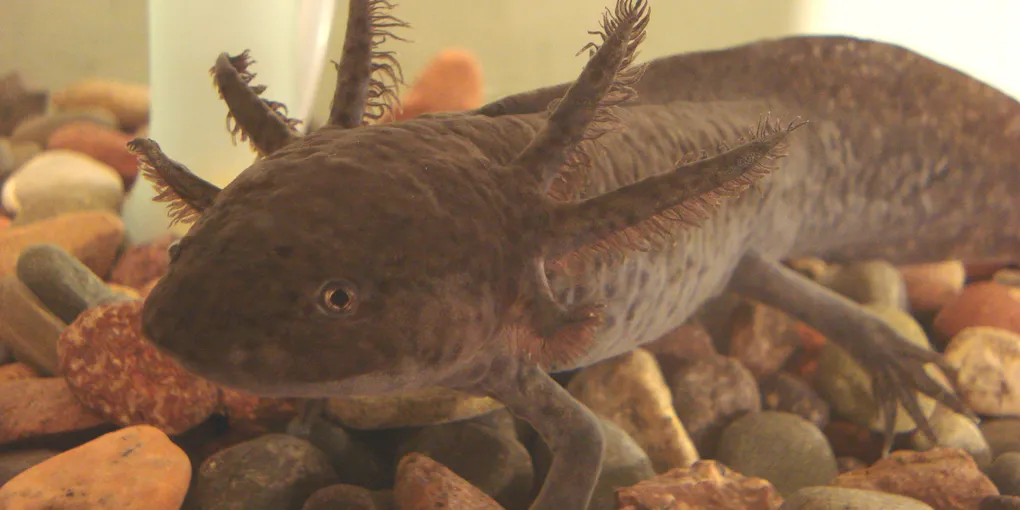
Are Axolotls Endangered? (Why the Wild Population Is Nearly Gone)
Yes — axolotls are critically endangered in the wild, with fewer than 1,000 left in Lake Xochimilco. The pet population is millions strong. Here's the full conservation story.
Yes, axolotls are critically endangered in the wild. The IUCN Red List has classified them as Critically Endangered since 2006, and survey data from 2024 suggests fewer than 1,000 individuals remain in their native Lake Xochimilco in Mexico City.
That’s the punchline most articles stop at. The full story is more nuanced and worth understanding if you’re considering buying one as a pet, because the captive population (millions worldwide) is in completely different shape than the wild population.
The Numbers
The decline is one of the fastest population collapses ever recorded in a vertebrate species:
| Year | Estimated density (wild axolotls per km²) |
|---|---|
| 1998 | 6,000 |
| 2003 | 1,000 |
| 2008 | 100 |
| 2014 | 35 |
| 2024 | Under 10 in most areas |
In a single generation, the wild population dropped 99%+. By comparison, mountain gorillas (also critically endangered) have a more stable population than axolotls. There may be fewer wild axolotls left than wild giant pandas.
Why Wild Axolotls Are Disappearing
Five interconnected causes, in roughly the order they hit:
1. Water pollution (started 1960s)
Mexico City expanded into the marshlands around Lake Xochimilco starting in the 1960s. Sewage, agricultural runoff, and industrial waste flowed into the canals. Ammonia, nitrate, heavy metals, and pesticides accumulated. Aquatic ecosystems collapsed across the lake system.
Axolotls have permeable skin and gills directly exposed to water. They absorb pollution faster than most aquatic vertebrates. Many died directly from water quality. Others survived but couldn’t reproduce successfully.
2. Invasive predator fish (1970s-1980s)
In an attempt to develop the lake economically, the Mexican government introduced two non-native fish species: African tilapia and common carp. Both eat axolotl eggs and juveniles voraciously.
Native axolotls had no evolved defense against either fish. Predation on hatchlings dropped recruitment to near zero in many areas. The reproducing adult population aged out without being replaced.
3. Habitat loss (ongoing)
The traditional Xochimilco landscape was “chinampas” — artificial farming islands separated by clean water canals. Chinampas maintained the shallow, clean, plant-rich habitat axolotls needed.
As Mexico City grew, chinampas were paved over for housing. Canals were diverted, drained, or filled. The wild habitat area shrank to less than 5% of its original extent. The remaining habitat is fragmented, with axolotl subpopulations isolated from each other.
4. Chytrid fungus (2000s onward)
The amphibian chytrid fungus (Batrachochytrium dendrobatidis) reached Mexico in the 2000s and has decimated many native amphibian populations. Axolotls show partial resistance compared to other salamanders, but chytrid still adds stress to populations already struggling.
5. Climate change (2010s onward)
Warming lake temperatures push axolotls outside their preferred 60-68°F range. Stressed populations show reduced breeding success. Drought years that lower lake levels expose juveniles to predators and dehydration.
The Captive Population Paradox
Here’s the strange part: while wild axolotls are nearly extinct, captive axolotls are arguably the most populous they’ve ever been. Estimates suggest:
- 2-3 million axolotls in the global pet trade as of 2024
- 50,000+ lab axolotls in research facilities (especially the Ambystoma Genetic Stock Center in Kentucky)
- Tens of thousands in zoos and conservation facilities
The contrast is brutal: a species critically endangered in its native habitat thrives in human care because humans like how they look.
Are Captive Axolotls Genetically Distinct?
Yes, and significantly so. Modern pet-trade axolotls trace back to a small founding population brought to Europe in 1864 — about 5-6 individuals. Decades of selective breeding for color morphs (leucistic, melanoid, GFP, copper) and decades of inbreeding have made captive axolotls genetically different from wild populations.
This means:
- Captive axolotls cannot simply be released to “restock” the wild population. Their genetic profile is too divergent and they carry traits (color morphs, lab-bred behaviors) that wouldn’t survive in the wild.
- The wild axolotl genome is irreplaceable. If wild axolotls go extinct, the wild gene pool is gone forever, even though captive axolotls remain abundant.
- Conservation efforts require preserving the wild genetic line separately. ULOA and similar organizations maintain wild-derived bloodlines specifically for potential future reintroduction.
What Is Being Done
Mexican conservation (primary)
Universidad Nacional Autónoma de México (UNAM) runs an axolotl breeding facility that maintains wild-genotype axolotls. Lake Xochimilco Ecological Park protects remaining habitat. The Mexican Federal Government has limited fishing and chinampa development in critical areas.
Chinampero partnerships
The “chinampero refugio” program partners with traditional farmers who maintain chinampa canals. Farmers who keep their canals clean and axolotl-friendly receive subsidies. As of 2024, about 50 chinampero refuges exist, supporting small protected axolotl populations.
International captive breeding
Conservation centers in the UK, Germany, and the US maintain wild-genotype axolotl populations as insurance against complete wild extinction.
Genetic research
The axolotl genome was sequenced in 2018 (one of the largest vertebrate genomes ever assembled). Researchers can now identify wild vs. captive genetic markers, supporting conservation tracking.
Is It Ethical to Own a Pet Axolotl?
This is a nuanced question. The case in favor:
- Captive axolotls are several generations removed from wild collection. Buying a pet axolotl does not directly impact wild populations.
- Captive populations preserve the species at large, even if not the wild gene pool.
- Awareness through pet ownership often translates into conservation donations.
The case against:
- Pet trade demand has historically led to wild collection in some countries.
- Many pet axolotls die young from poor care, creating a churning demand for new individuals.
- Owning an axolotl without understanding the conservation context is morally shallow.
The honest middle ground: owning a pet axolotl is fine if you commit to proper care (15+ year lifespan is achievable) and learn the conservation story. Don’t buy on impulse. Don’t support sellers who collect from the wild. Consider donating to UMSNH/UNAM/ULOA conservation efforts.
Is It Illegal to Own Axolotls?
Mexican axolotl export from the wild has been illegal since the 1970s. Captive-bred axolotls are legal in most countries.
However, some places have specific restrictions:
- California: illegal to own axolotls without a permit (treated as invasive risk)
- New Mexico: similar restrictions
- Maine, Virginia, New Jersey, Hawaii: various rules, generally requiring permits
- Most US states: legal with no permit needed
- UK: legal, captive-bred only
- Australia: illegal to own (strict invasive species policy)
- EU: generally legal, varies by country
If you’re unsure, check local exotic pet regulations before buying.
What You Can Do
If you care about wild axolotl conservation:
- Donate to UMSNH (Universidad Michoacana Conservation Program) — best direct conservation funding
- Donate to UNAM axolotl research and breeding programs
- Support chinampero farmer cooperatives in Xochimilco
- Buy only captive-bred axolotls if you own one as a pet
- Share the conservation story — most people don’t know wild axolotls are nearly gone
If you own a captive axolotl, you can also support the species indirectly by being a responsible keeper who keeps your axolotl healthy and alive for its full natural lifespan. Every captive axolotl that lives 15 years is one less individual that needed to be bred to replace a quickly-dead pet store axolotl.
For setup and care, see the start here walkthrough and tank setup guide.
The Bottom Line
Wild axolotls are critically endangered with fewer than 1,000 left. The decline has been one of the fastest in modern conservation history, driven by pollution, invasive fish, and habitat loss in Lake Xochimilco. The species survives globally because captive populations have boomed in parallel.
If you own or are considering an axolotl, you’re participating in this odd duality: helping ensure the species continues to exist on Earth, while doing nothing directly for the wild populations that are vanishing. The two questions — “are axolotls endangered” (yes, in the wild) and “are pet axolotls okay to own” (yes, with caveats) — have different answers because they’re really different questions.
Read the morph guide for visual differences between captive color types. And if you’re a new keeper, the start here walkthrough covers everything you need to know to keep your axolotl alive for the full 15 years.
Newsletter
The weekly axolotl note.
One honest care note, one Amazon find, one beginner question answered. Sundays. No spam.
Disclosure: The Axolotl Guide is a participant in the Amazon Services LLC Associates Program, an affiliate advertising program designed to provide a means for sites to earn advertising fees by advertising and linking to Amazon.com. As an Amazon Associate we earn from qualifying purchases, at no extra cost to you.
More Buying & Breeders Guides
Axolotl Price: How Much Does an Axolotl Actually Cost?
The axolotl itself is $30-$100. The setup costs $250-$400. Annual upkeep is $150-$250. Here's the complete cost breakdown nobody tells you upfront.
Can You Eat Axolotls? (Yes Historically, No Today, And Here's Why)
Aztec people ate axolotls for over 500 years. They're now critically endangered and illegal to harvest. Here's the full history and the legal status today.
Where to Buy an Axolotl (Ranked Best to Worst)
Best places to buy an axolotl in 2026, ranked. Reddit and Facebook breeders win on price and quality. Big-box pet stores lose. Here's the full ranking with red flags to spot.