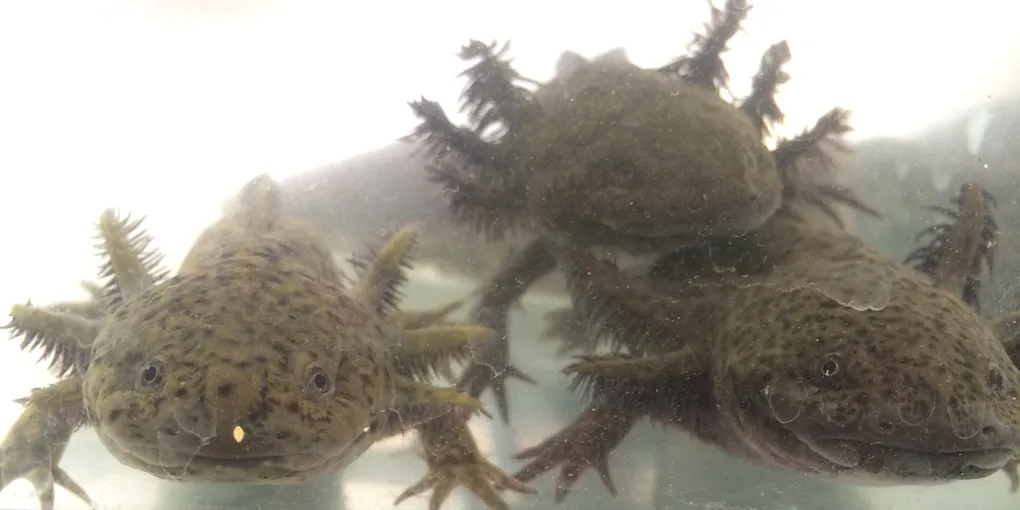
Are Axolotls Nocturnal? (What They Actually Do at Night)
Axolotls are crepuscular, not strictly nocturnal. They're most active at dawn and dusk, active at night, and rest during the day. Here's the full activity pattern.
Short answer: axolotls aren’t strictly nocturnal — they’re crepuscular. That means most active at dawn and dusk, active but not peak at night, and mostly resting during the day. Here’s the full picture, and what it means for daily care.
Crepuscular, not nocturnal (the technical answer)
Three activity categories exist in the animal kingdom:
- Diurnal: active during daylight (humans, dogs, most birds)
- Nocturnal: active at night (owls, bats, cats)
- Crepuscular: active at dawn and dusk (axolotls, deer, rabbits)
Axolotls fall into the third category. In the wild in Lake Xochimilco, they evolved to hunt small invertebrates during the twilight hours when light levels are low enough to avoid daytime predators but the water is warm enough to be active.
In captivity, this natural rhythm persists. Watch your axolotl for a full day and you’ll see the same pattern:
| Time | Activity level |
|---|---|
| Dawn (6-8 AM) | High — hunting, exploring |
| Morning (8-11 AM) | Moderate — some movement |
| Midday (11 AM-3 PM) | Low — resting, hiding |
| Afternoon (3-6 PM) | Moderate — becoming active |
| Dusk (6-9 PM) | Peak — most active period |
| Night (9 PM-6 AM) | High — walking, feeding |
The Wikipedia article on Ambystoma mexicanum notes this same pattern — it’s well-documented in axolotl biology literature.
What axolotls do at night
If you’ve got a nightlight or a nearby room lamp, watching your axolotl after dark is enlightening. Night behavior includes:
- Continuous bottom-walking — patrolling the tank floor
- Surface gulping — trips to the surface for air, roughly every 15-30 minutes
- Food seeking — striking at any perceived movement
- Exploring corners — checking new spots and behind decor
- Hunting reflexes — even without live food, they’ll strike at reflections and shadows
The axolotl you see during the day at bottom rest is a completely different animal at 2 AM.
Do axolotls sleep?
Not in the mammalian sense. Axolotls don’t have the sleep cycles humans have — no REM, no distinct sleep-vs-wake states. What they DO have is periods of reduced activity where:
- Gill movement slows
- They rest motionless on the substrate or against decor
- Response time to stimuli lengthens
- Metabolism reduces slightly
This looks like sleep and functionally serves the same purpose, but it’s not identical to what mammals do. Some researchers use the term “quiescence” to describe it. Others just call it “resting behavior.”
You may see your axolotl in this state at any time of day — often during bright midday hours when they’re least stimulated.
Should I keep my axolotl tank dark?
Mostly yes. Axolotls have no eyelids and their eyes lack the light-adaptation mechanisms mammals have. They evolved for the dim, murky waters of Lake Xochimilco. Bright aquarium lighting stresses them.
Best lighting practice:
- No overhead aquarium light — or if you use one, keep it low-output and on 8 hours max
- Provide multiple hides — so they can retreat to shade
- Position tank away from windows — direct sunlight is far too bright
- Turn all lights off at night — even the ambient room light if possible
If you want to observe your axolotl at night without disturbing them, a red LED nightlight works — axolotls don’t perceive red light well and won’t be stressed by it. Same trick reptile keepers use.
What this means for feeding
Since axolotls are most active at dawn and dusk, aligning feeding with those windows produces the best response:
- Best time: Evening, right before you go to bed (dusk peak)
- Second best: Early morning as you wake up (dawn peak)
- Avoid: Bright midday when they’re least responsive
- Skip: Feeding at unnatural times just because you’re free — axolotls do fine with 2-3 feedings per week, timed with their rhythm
For the feeding schedule by age, see how often to feed an axolotl.
Am I disturbing my axolotl by walking past the tank?
At night — probably, a little. Axolotls don’t distinguish “human just passing by” from “predator approaching.” Every movement near the tank is a potential threat.
Mitigations:
- Place the tank in a low-traffic room
- Don’t tap the glass (this trains a stress response)
- Move slowly around the tank
- Use dim lighting rather than sudden bright light
None of this means you have to tiptoe around your house forever. Axolotls habituate to normal household noise and movement within weeks.
Behavior differences by age
Younger axolotls tend to be more active around the clock than adults. Juveniles under 5 inches often visibly move during midday hours. Adults become more strictly crepuscular as they mature.
Old axolotls (10+ years) may reduce activity overall — resting longer, moving less at night. This is normal aging, not illness.
For the full behavior guide covering 12 common patterns, see axolotl behavior guide.
Bottom line
Axolotls are crepuscular. Peak activity at dawn and dusk, high activity through the night, low activity during the day. Keep tanks dark, feed at dawn or dusk, don’t expect a lively pet at 2 PM.
If you’re new to axolotl keeping, understanding this rhythm makes daily observation and feeding much easier. See complete axolotl care guide for the routine that aligns with their natural activity cycle.
Newsletter
The weekly axolotl note.
One honest care note, one Amazon find, one beginner question answered. Sundays. No spam.
Disclosure: The Axolotl Guide is a participant in the Amazon Services LLC Associates Program, an affiliate advertising program designed to provide a means for sites to earn advertising fees by advertising and linking to Amazon.com. As an Amazon Associate we earn from qualifying purchases, at no extra cost to you.
More Health & Behavior Guides
Axolotl Fungus (Saprolegnia): How to Recognize and Treat It
White cotton-like growth on axolotls is Saprolegnia fungus. Catch it early and salt baths cure it in 5-7 days. Here's the complete treatment protocol.
Do Axolotls Bite? (Yes, And Here's What That Means For You)
Axolotls bite anything that looks like food, including your fingers. The good news: axolotl bites are harmless to humans. The bad news: their bites cause real damage to other axolotls.
How Big Do Axolotls Get? (Size Chart by Age)
Adult axolotls reach 9-12 inches on average, with exceptional individuals hitting 14-18 inches. Here's the full growth chart by age, what affects size, and the size most pet axolotls actually reach.