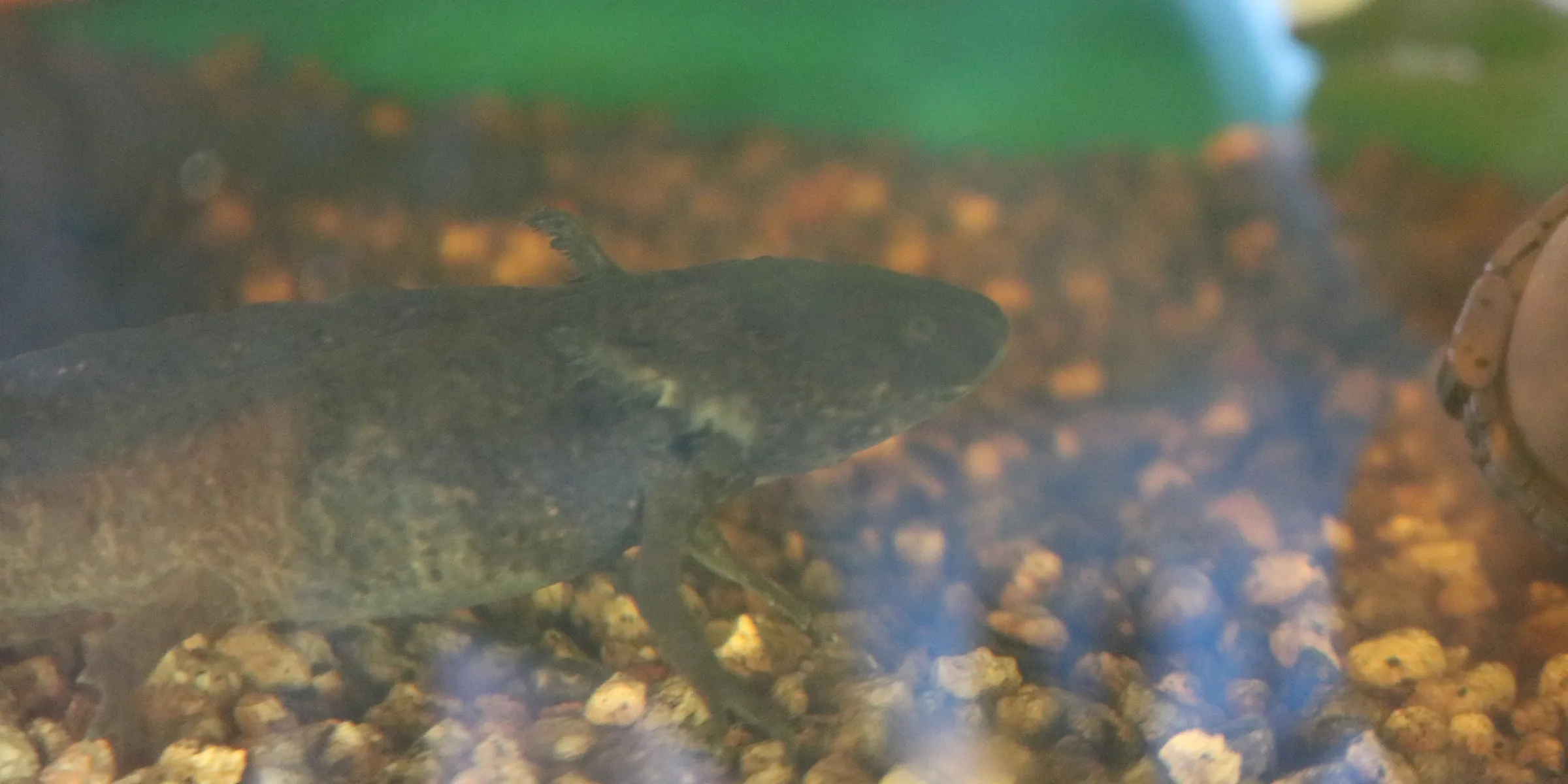
The complete tank setup at a glance
Setting up an axolotl tank isn't hard — it's just specific. Get these things right and you're set for the next 15 years:
- Tank: 20-gallon LONG minimum, 40-gallon breeder ideal
- Substrate: Bare bottom or fine sand (no gravel ever)
- Filter: Sponge filter on an air pump (gentle flow)
- Temperature: 60-68°F (most homes need cooling, not heating)
- Cycle the tank for 4-6 weeks before bringing the axolotl home
For tank size details specifically, see axolotl tank size guide. For the broader care routine, see axolotl care guide.
The 10-step setup sequence
Buy the tank and gear (Day 1)
Get the 20-gallon long or 40-gallon breeder tank, sponge filter, air pump, glass lid, fine sand or bare bottom substrate, water conditioner, test kit, thermometer, and hide.
Rinse and place the tank (Day 1)
Rinse with plain water (no soap). Place on a sturdy stand in a cool, low-traffic spot away from direct sunlight and heating vents.
Add substrate and decor (Day 1)
Rinse sand thoroughly, add 1 inch to tank floor. Place hide, plants, and decor. Bare bottom is also acceptable — easier to clean.
Fill with dechlorinated water (Day 1)
Fill tank with cool tap water treated with Seachem Prime. Match temperature to 65-68°F.
Install filter and air pump (Day 1)
Set up sponge filter with air pump and check valve. Run for 24 hours to confirm flow is gentle.
Start the nitrogen cycle (Day 2)
Add ammonia source (pure ammonia drops or fish flakes). Begin testing water every 2-3 days.
Cycle progression (Weeks 1-4)
Ammonia rises, then drops. Nitrite rises, then drops. Nitrate accumulates. Each conversion stage takes 1-2 weeks.
Confirm cycled (Week 4-6)
Tank is cycled when ammonia and nitrite both stay at 0 ppm 24 hours after adding fresh ammonia. Nitrate should be present (10-30 ppm).
Find a reputable breeder (Week 4-5)
While cycling finishes, find your axolotl source. See where to buy an axolotl guide for vetting tips.
Bring the axolotl home (Week 6)
Acclimate by floating bag for 30 minutes, slowly add tank water over 60 minutes, gently net into tank. Don't feed for 24 hours.
The complete equipment list
Everything you need, in priority order:
- 20-gallon long aquarium — minimum size for one adult axolotl. Amazon link
- Glass aquarium lid — axolotls jump, this isn't optional
- Sponge filter + air pump — Hygger sponge filter + Tetra Whisper air pump
- Seachem Prime water conditioner — Amazon link
- API Freshwater Master Test Kit — liquid, not strips. Amazon link
- Inkbird digital thermometer — accurate temperature monitoring
- Fine aquarium sand OR bare bottom — never gravel
- Ceramic hide — stress reduction
- Sinking pellets — Hikari Sinking Pellets
- Stainless feeding tongs — keep fingers out of the tank
For the complete one-tap kit list, see axolotl starter kit guide or jump straight to the shop page.
The cycling process (most important step)
Cycling means establishing the beneficial bacteria that convert axolotl waste (ammonia) into harmless nitrate. Skip this step and your axolotl dies of ammonia poisoning within weeks. It's the #1 cause of death in new pet axolotls.
What happens during cycling
- Week 1-2: Add ammonia source. Bacteria begin converting ammonia → nitrite.
- Week 2-4: Ammonia drops, nitrite spikes. Different bacteria start converting nitrite → nitrate.
- Week 4-6: Both ammonia and nitrite drop to 0. Nitrate accumulates (this is normal — water changes remove it).
- Cycled confirmation: Tank is cycled when you can add a fresh dose of ammonia and 24 hours later both ammonia and nitrite read 0.
How to speed up cycling
- Add live bacteria (Fritz Zyme 7, Seachem Stability) — cuts cycling time by 1-2 weeks
- Borrow filter media from an established tank — instant bacterial seed
- Keep water at 68-72°F during cycling (slightly warmer than axolotl target) — bacteria multiply faster
- Do NOT do water changes during cycling — you're trying to build up nutrients for bacteria
Common tank setup mistakes
- Buying the axolotl before the tank cycles — kills more axolotls than anything else
- Using gravel substrate — fatal impaction risk
- Tank too tall, not long enough — axolotls walk along the bottom, not vertically
- Filter flow too strong — stresses axolotls. Use sponge filter or pre-filter sponge on HOB intake
- Skipping the lid — axolotls absolutely will jump out
- Bright lighting — axolotls hate it, hide constantly under bright light
- Adding tankmates — fish bite gills, shrimp get eaten, other axolotls fight
Tank placement tips
- Away from direct sunlight — sun warms water quickly
- Away from heating vents — same reason
- Quiet room — axolotls stressed by vibration
- Sturdy stand — a 20-gallon full of water weighs ~250 lbs
- Near power outlet — for filter and optional chiller
- Basement or cool room — perfect for axolotls in summer
Frequently asked about axolotl tank setup
How long does it take to set up an axolotl tank?
The physical setup takes 1-2 hours. The full cycling process before adding an axolotl takes 4-6 weeks. Total time from empty tank to ready-for-axolotl is about 6 weeks.
What do you need to set up an axolotl tank?
20-gallon long tank (minimum), glass lid, sponge filter + air pump, water conditioner (Seachem Prime), liquid test kit (API Master), digital thermometer, fine sand or bare bottom substrate, hide, and sinking pellets. Budget $250-$300 for the bare minimum.
Do I need to cycle the tank before the axolotl?
Yes, absolutely. Adding an axolotl to an uncycled tank exposes it to toxic ammonia and nitrite. Ammonia poisoning is the #1 cause of death in new pet axolotls. Cycle takes 4-6 weeks.
Can I set up an axolotl tank without a filter?
No. Filtration is required to convert axolotl waste into less harmful compounds. The cheapest and most axolotl-friendly option is a sponge filter on an air pump.
What substrate should I use for an axolotl tank?
Fine aquarium sand (under 1mm grain) OR bare bottom. NEVER gravel — axolotls inhale food and substrate together, and gravel causes fatal impaction. Bare bottom is easier for beginners to maintain.
Related guides
- Axolotl tank size guide — how many gallons by size
- Axolotl starter kit — complete gear list
- Axolotl aquarium setup — alternate format
- Water parameters cheat sheet
- How to clean an axolotl tank
- Complete axolotl care guide
- Where to buy an axolotl
- Complete gear list with Amazon links