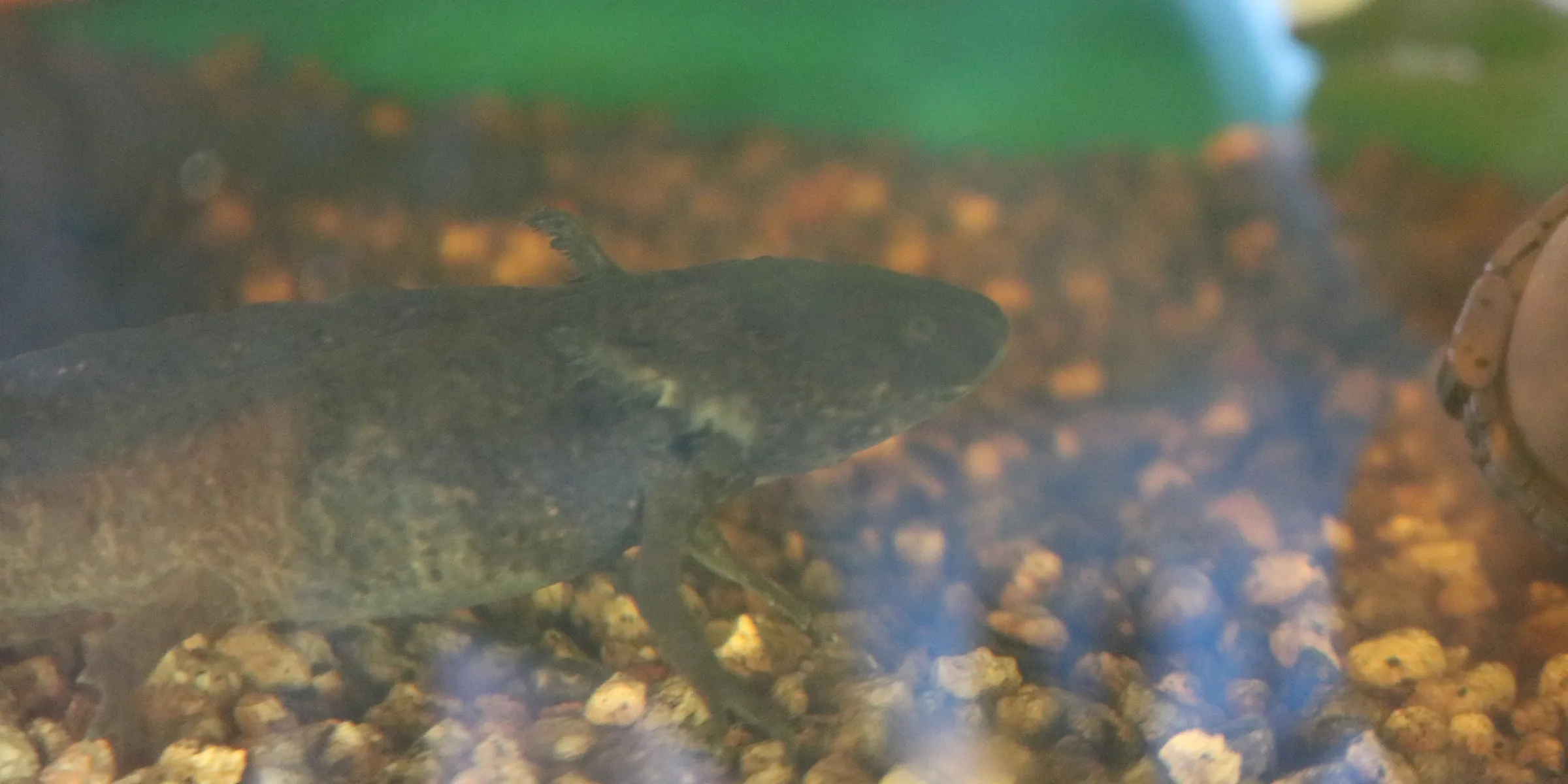
What you need for an axolotl aquarium
Complete starting equipment list:
- Tank: 20-gallon long glass aquarium minimum ($50-$80)
- Lid: Glass aquarium lid ($25)
- Filter: Sponge filter + air pump ($40 combined)
- Substrate: Fine aquarium sand OR bare bottom ($24 or free)
- Hide: Ceramic cave for axolotl shelter ($15)
- Decor: 1-2 silk plants for visual cover ($20)
- Water conditioner: Seachem Prime ($18)
- Test kit: API Freshwater Master Test Kit ($32)
- Thermometer: Digital probe thermometer ($15)
- Food: Hikari sinking pellets ($15)
- Feeding tongs: Stainless steel tongs ($8)
Total: $260-$290 for the complete axolotl aquarium starter setup. The shop page has all of this with one-tap Amazon checkout.
Axolotl aquarium size
The minimum aquarium for one adult axolotl is 20 gallons long (30" × 12" × 12"). The recommended size is 40-gallon breeder (36" × 18" × 16").
Tank shape matters: axolotls walk along the bottom rather than swim up and down. Long, shallow tanks are better than tall, narrow ones — even at the same total gallons. A 20-gallon LONG works. A 20-gallon TALL doesn't.
For tank size breakdowns by gallons, see axolotl tank size guide.
Aquarium location
Where you place the axolotl aquarium affects the entire setup:
- Away from direct sunlight — sun warms the water and stresses the axolotl
- Away from heating vents — same reason
- Quiet room — axolotls are stressed by vibration and noise
- Stable temperature — basements are often perfect because they stay cool year-round
- Sturdy stand — a 20-gallon full of water weighs ~250 lbs
- Near an outlet — for filter, air pump, optional chiller
Setting up the aquarium
Step 1: Rinse and place the tank
Rinse with plain water (no soap) and place on a level, sturdy stand. Use a level to verify the tank sits flat.
Step 2: Add substrate
Rinse fine aquarium sand thoroughly until water runs clear. Add 1 inch of sand to the tank floor. Bare-bottom setups also work — easier to clean, slightly less natural.
Step 3: Fill with dechlorinated water
Fill with cool tap water treated with Seachem Prime (1 drop per gallon). Match temperature to 65-68°F.
Step 4: Install filter and air pump
Set up sponge filter inside the tank. Run airline tubing to the air pump outside the tank with a check valve in between (prevents backflow during power outages).
Step 5: Add decor and hide
Place the ceramic hide near a back corner. Add 1-2 silk plants for visual cover.
Step 6: Start cycling
Add ammonia source (pure ammonia drops or fish flakes). Test water every 2-3 days. Cycle takes 4-6 weeks before the axolotl can be added.
Full cycling timeline at complete tank setup guide.
Axolotl aquarium temperature
The target temperature is 60-68°F (16-20°C). This is below most home temperatures, so you usually need cooling rather than heating.
Cooling options:
- Fan across surface — drops temperature 2-5°F (cheapest)
- Frozen water bottles — emergency summer cooling (free, manual)
- Aquarium chiller — required for hot climates ($250-$600)
For details on cooling vs heating, see do axolotls need a heater.
Aquarium decor for axolotls
Safe decor options:
- Ceramic hides and caves — smooth, no sharp edges
- Smooth river rocks — too big to swallow (larger than axolotl's head)
- Silk plants — softer than plastic if nibbled
- Live plants — Java moss, Java fern, Anubias, Marimo moss balls (cold-tolerant)
- Driftwood — pre-soaked to prevent tannin staining
Avoid:
- Gravel or small pebbles (impaction risk)
- Sharp plastic plants (can cut slime coat)
- Resin decor with cracks (harbor bacteria)
- Anything painted or coated with sealant
Maintaining an axolotl aquarium
Weekly: 20-25% water change with dechlorinated, temperature-matched water. Test parameters.
Monthly: rinse filter sponge in OLD tank water (never tap water). Top off evaporation.
Yearly: replace bulbs if using lights, replace test kit reagents.
What NOT to put in an axolotl aquarium
- Other axolotls — they bite each other
- Fish — nip gills, carry parasites, need warmer water
- Shrimp — get eaten
- Snails — most rasp the axolotl's slime coat
- Gravel — fatal impaction risk
- Bright lighting — axolotls are nocturnal-ish
- Strong filter flow — stresses axolotls
For more on what doesn't work with axolotls, see tankmate compatibility guide.
Frequently asked about axolotl aquariums
What kind of aquarium do axolotls need?
Axolotls need a 20-gallon long aquarium minimum (30" × 12" × 12"). 40-gallon breeder is the recommended size. The aquarium needs a sponge filter, glass lid, bare bottom or fine sand substrate, and water at 60-68°F. No tankmates.
Can axolotls live in a fish tank?
Yes, axolotls live in standard glass aquariums (the same kind used for fish). The setup requirements are different from typical fish tanks: cooler water, no gravel, gentle filter flow, no tankmates.
What's the difference between an axolotl tank and a regular fish tank?
The tank itself is the same — both are standard glass aquariums. The setup differs: axolotl tanks need cooler water (60-68°F vs 75-80°F for tropical fish), bare or sand substrate (vs gravel for fish), gentle flow (vs strong filtration for fish), and no tankmates.
Can I put an axolotl in a freshwater aquarium?
Yes, all axolotl aquariums are freshwater. Axolotls are obligate freshwater amphibians and cannot live in saltwater or brackish water.
Do axolotl aquariums need a heater?
No, axolotl aquariums usually need COOLING, not heating. The target temperature (60-68°F) is below most room temperatures. Use a fan or aquarium chiller for cooling. A small low-wattage heater is only needed if your room drops below 55°F regularly.
Ready to build the aquarium? Start with the complete tank setup guide for the cycling timeline, then the shop page for the gear list.