Axolotl Tank Setup: The Complete Beginner Guide (2026)
Tank size, filter, substrate, water parameters, cycling timeline. Everything you need to set up an axolotl tank from scratch, in order.
If you’re reading this before buying an axolotl, you’re already ahead of 80% of new keepers. The single biggest mistake is buying the axolotl before the tank is ready. By the time you’re done with this guide you’ll know exactly why that’s fatal and how to set up a tank that actually keeps your axolotl alive long-term.
The Setup, In Order
- Buy the tank, filter, substrate, water conditioner, test kit, and thermometer
- Set up the tank with dechlorinated water
- Start the nitrogen cycle (this takes 4-6 weeks)
- Test water parameters daily, then weekly once stable
- Reserve your axolotl with a reputable breeder
- Acclimate the axolotl when it arrives
Do these in order. Skipping the cycle kills the axolotl. Buying the axolotl first means you’ll either rush the cycle (and the axolotl dies) or hold the axolotl in a tub for weeks (stressed but survivable).
Tank Size: 20 Gallon Long or Larger
A single adult axolotl needs 20 gallons LONG at the absolute minimum. The key word is long. A 20 gallon long tank is 30 inches wide, 12 inches deep, 12 inches tall.
Why long matters: axolotls are benthic, which means they live on the bottom. They walk along the floor more than they swim up and down. Tank floor area matters more than tank height.
If you have the space, get a 40 gallon breeder instead. It’s $60 more, gives the axolotl twice the floor space, holds more stable water parameters, and you’ll never wish you went smaller.
Filter: Sponge Filter on an Air Pump
Axolotls hate strong current. A sponge filter powered by an air pump is the default recommendation across every axolotl care community. Reasons:
- Gentle flow that doesn’t stress the axolotl
- Huge surface area for the beneficial bacteria your tank needs for cycling
- Easy to clean (just rinse in old tank water)
- Cheap to run
If you prefer a hang-on-back (HOB) filter or canister, get one rated for at least 2x your tank volume, then attach a pre-filter sponge to the intake to soften the flow.
Substrate: Bare Bottom or Fine Sand
Two safe choices:
Bare bottom. No substrate at all. Easiest to clean, fastest to spot waste, zero impaction risk. Many serious keepers use bare bottom for life.
Fine aquarium sand. Grain size under 1mm. Sand that’s too coarse causes the same impaction problem as gravel. Best brands: CaribSea Super Naturals, Imagitarium Black Sand, basic pool filter sand (washed first).
Never use: gravel, pebbles, marbles, glass beads, or river rocks. Axolotls will eat them and die.
Water: Dechlorinated, 60-68°F, 0 Ammonia
Axolotls need:
- Temperature: 60-68°F (16-20°C). Above 70°F causes heat stress, refusal to eat, and bacterial infections. Below 50°F slows them dangerously.
- Ammonia: 0 ppm always
- Nitrite: 0 ppm always
- Nitrate: under 20 ppm (do water changes when it climbs higher)
- pH: 7.4 to 7.6 ideal, anywhere 6.5 to 8.0 is acceptable
- Hardness (GH): 7-14 dGH (moderately hard)
- KH: at least 3 dKH for pH stability
Use Seachem Prime as your water conditioner. It detoxifies chlorine, chloramine, and small amounts of ammonia. A 500ml bottle lasts most keepers 6+ months.
Test parameters with the API Freshwater Master Test Kit (liquid drops, not strips). Strips are unreliable.
The Nitrogen Cycle: The 4-6 Week Process
The nitrogen cycle is the most important and most skipped step. Here’s what’s happening:
- Axolotl waste produces ammonia (toxic)
- Beneficial bacteria convert ammonia → nitrite (still toxic)
- Different bacteria convert nitrite → nitrate (much less toxic)
- Water changes remove nitrate
Without those bacteria colonies, ammonia builds up and burns the axolotl’s gills, skin, and internal organs. This is what kills axolotls in week 2.
Fishless cycle method:
- Set up tank with dechlorinated water, filter running, thermometer in place
- Add pure ammonia (Dr. Tim’s Ammonium Chloride) to reach 2 ppm reading on your test kit
- Optional: add a bacteria starter (Fritz Zyme 7, Seachem Stability) to speed things up
- Test daily
- Week 1-2: ammonia stays high, no nitrite yet
- Week 2-3: ammonia starts dropping, nitrite spikes
- Week 3-4: ammonia hits 0, nitrite drops, nitrate climbs
- Week 4-6: ammonia and nitrite both go from 2 ppm to 0 in 24 hours
- Do a 50% water change to bring nitrate under 20 ppm
- Tank is cycled
If your test results don’t move at all for two weeks, your starter dose was wrong or your dechlorinator killed the bacteria. Restart with fresh dechlorinated water.
Decor and Plants
Axolotls need at least one hide for stress reduction. Use ceramic or smooth resin caves with an entrance large enough for an adult axolotl to pass through. Avoid sharp edges, painted ceramics, or anything that came from a non-aquarium store.
Safe plants for axolotls: Java moss, java fern, anubias, marimo moss balls, hornwort. All tolerate cool water and low light, and won’t break or shed material the axolotl can choke on.
Avoid: rooted plants in soil substrate, plants that need CO2 injection, plants with sharp leaves, terrestrial plants sold as “aquarium plants” at pet stores.
Lighting: Low or None
Axolotls don’t need light. They’re nocturnal and have no eyelids. Bright lighting causes stress.
If you want a light for viewing, use a low-output LED strip on a timer (4-6 hours per day max). Avoid actinic blue or strong daylight bulbs unless you have GFP morphs that fluoresce under UV.
Acclimating Your Axolotl on Arrival
When your axolotl arrives:
- Float the sealed shipping bag in your tank for 15 minutes to equalize temperature
- Open the bag and add a small amount of tank water (1/4 cup) every 5 minutes for 20-30 minutes
- Use a soft net to gently transfer the axolotl into the tank (don’t pour the shipping water into your tank)
- Don’t feed for 24 hours
- Watch behavior closely for the first week
What You Actually Need to Buy
Bare minimum starter list:
- 20 gallon long tank ($60) or 40 gallon breeder ($120)
- Glass aquarium lid ($25)
- Sponge filter ($18)
- Air pump rated for tank size ($22)
- Seachem Prime water conditioner ($18)
- API Freshwater Master Test Kit ($32)
- Hikari sinking pellets ($15)
- Digital probe thermometer ($15)
- Ceramic hide ($15)
- Feeding tongs ($8)
Total: about $230 for a 20 gallon setup. Get the Beginner Essentials Kit to add the whole list to your Amazon cart at once.
Common Setup Questions
Can I keep two axolotls together? No. Axolotls are cannibalistic. They will bite each other’s gills and limbs. One tank, one axolotl.
Do I need a heater? Not usually. Axolotls want cool water (60-68°F). Most homes are warm enough that you need cooling, not heating. Only if your room drops below 50°F do you need a low-wattage heater.
Can I use tap water? Yes, with a dechlorinator (Seachem Prime). Chlorine and chloramine in tap water kill axolotls and the beneficial bacteria you need for cycling.
How often do I do water changes? 20-25% weekly once the tank is cycled and an axolotl is in it. Use a turkey baster to spot-clean waste daily.
That’s the complete tank setup. Read the Start Here walkthrough for the full timeline, then the food safety database for what to feed once your axolotl arrives.
Newsletter
The weekly axolotl note.
One honest care note, one Amazon find, one beginner question answered. Sundays. No spam.
Disclosure: The Axolotl Guide is a participant in the Amazon Services LLC Associates Program, an affiliate advertising program designed to provide a means for sites to earn advertising fees by advertising and linking to Amazon.com. As an Amazon Associate we earn from qualifying purchases, at no extra cost to you.
More Tank Setup Guides
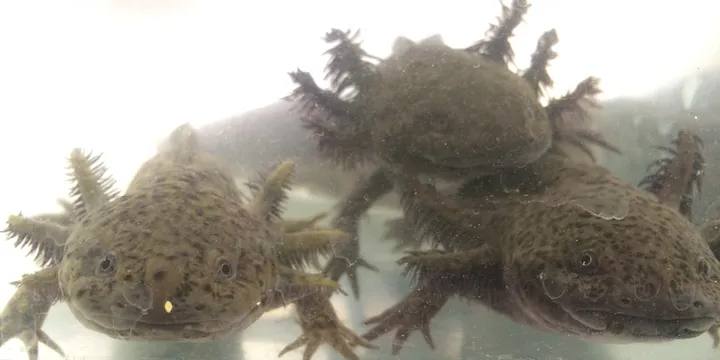
Are Axolotls Nocturnal? (What They Actually Do at Night)
Axolotls are crepuscular, not strictly nocturnal. They're most active at dawn and dusk, active at night, and rest during the day. Here's the full activity pattern.
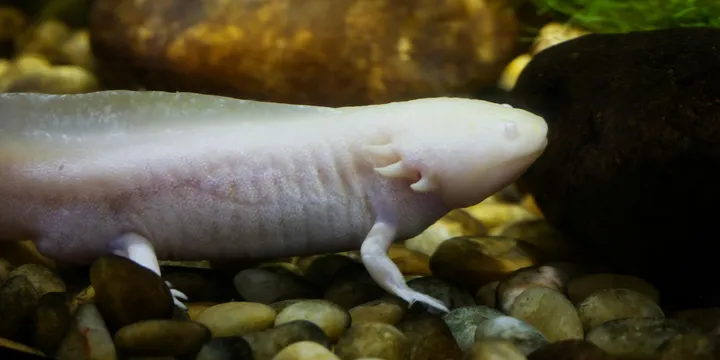
Axolotl Fungus (Saprolegnia): How to Recognize and Treat It
White cotton-like growth on axolotls is Saprolegnia fungus. Catch it early and salt baths cure it in 5-7 days. Here's the complete treatment protocol.
Axolotl Water Change: How Much, How Often, and Exact Steps
Weekly 20-25% water changes are the standard. Full guide to axolotl water changes: exact procedure, tools, timing, and what NEVER to do.