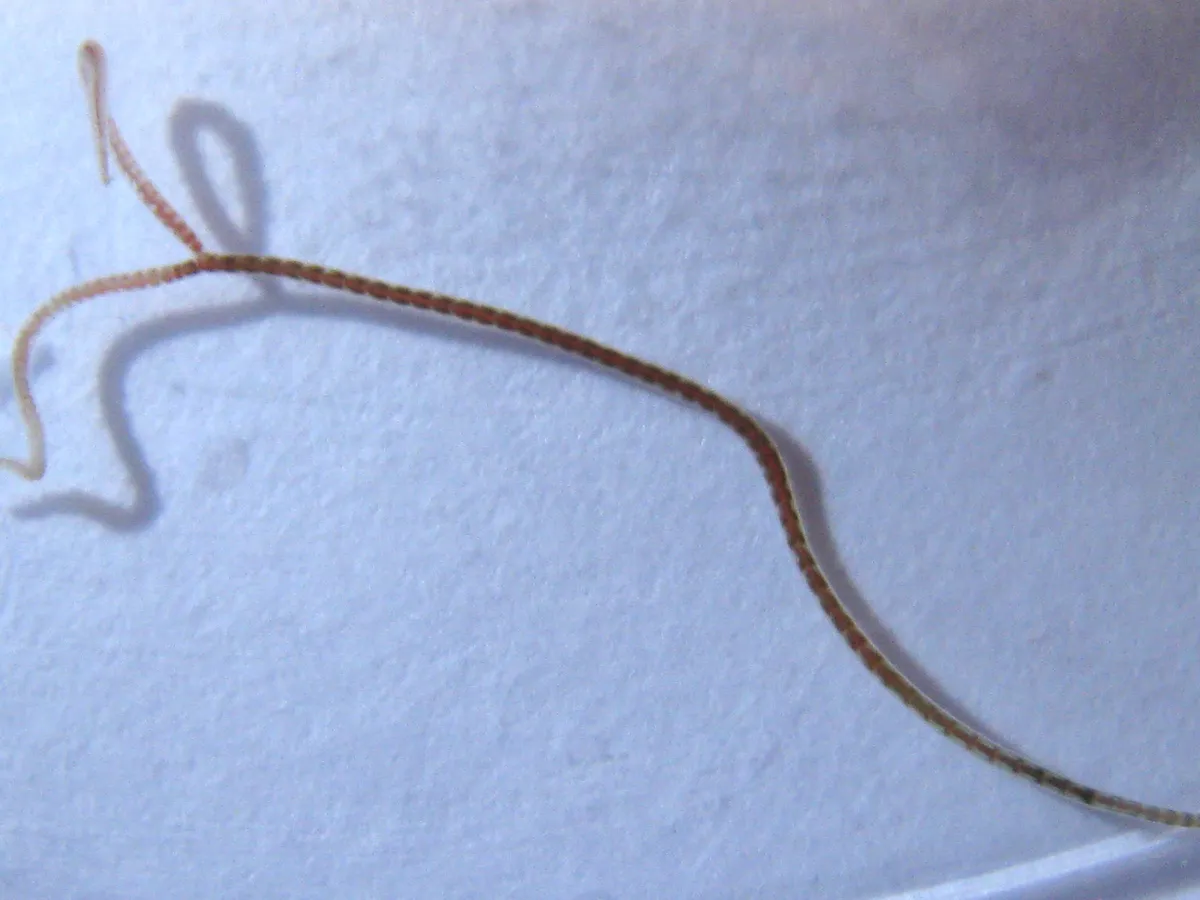
The 6 types of live worms (ranked)
Not all live worms are safe for axolotls. Here's the complete ranking from best to dangerous:
1. Earthworms (Canadian Nightcrawlers)
Best stapleBest for
Adult axolotls
Safety
Excellent
Shelf life
4-6 weeks refrigerated
Cost
$5-$10 per dozen at bait shops
The gold standard live worm for axolotls. Cut to size for juveniles (no piece larger than the axolotl's head). Buy from bait shops, NOT garden centers (compost worms have toxic skin).
2. Live Blackworms
Premium treatBest for
All ages, especially juveniles
Safety
Excellent
Shelf life
2-3 weeks refrigerated in shallow water
Cost
$15-$30 per bag online
California blackworms (Lumbriculus variegatus). Soft-bodied, easy to digest, axolotls go wild for them. Store in fridge with daily water changes.
3. Live Bloodworms
CautionBest for
Occasional treats only
Safety
Iron-heavy, not a staple
Shelf life
5-7 days refrigerated
Cost
$10-$15 per cube pack
Chironomid midge larvae. Tasty but iron-rich. Long-term staple feeding stresses organs. Use 1-2x per week max.
4. Live Whiteworms
Good for juvenilesBest for
Juvenile axolotls under 5 inches
Safety
Good, high fat
Shelf life
Keep as ongoing culture
Cost
$15-$25 for starter culture
Enchytraeus albidus. Smaller than earthworms, perfect for juveniles. Can be cultured at home in plastic containers.
5. Live Grindal Worms
Niche useBest for
Very young axolotls (under 3 inches)
Safety
Good
Shelf life
Keep as ongoing culture
Cost
$10-$15 for starter
Smaller than whiteworms. Useful for the smallest juveniles. Niche but worth knowing about.
6. Live Mealworms
AVOIDBest for
Nothing — don't use
Safety
Dangerous
Shelf life
n/a
Cost
n/a
Hard chitinous exoskeleton causes impaction. NEVER feed mealworms to axolotls despite what some pet stores say.
How to feed live worms to axolotls
- Use feeding tongs, not fingers. Axolotls strike fast and will grip your finger if it's near the worm.
- Drop the worm directly in front of the axolotl's snout. Axolotls hunt by smell + movement at close range.
- Cut large worms to size. No piece should be larger than the axolotl's head.
- Pre-rinse the worms in dechlorinated water to remove dirt and substrate.
- Wait 15-20 minutes after feeding, then siphon out any uneaten worms.
- Feed in front of the axolotl, not behind decor — axolotls won't actively hunt for buried worms.
How many live worms to feed
| Age | Earthworm portion | Frequency |
|---|---|---|
| Juvenile (under 5 inches) | 1/4 to 1/2 worm chopped | Daily |
| Sub-adult (5-8 inches) | 1 medium worm | Every other day |
| Adult (8-10 inches) | 1-2 medium worms | 2-3 times per week |
| Large adult (10+ inches) | 2-3 worms or 1 large | 2-3 times per week |
Where to buy live worms for axolotls
- Earthworms (Canadian nightcrawlers): Local bait shops are cheapest ($5-$10 per dozen). NEVER use garden compost worms — they have toxic skin coating.
- Live blackworms: Online suppliers like Aquatic Foods, JehmCo, or Eastern Aquatics. Around $15-$30 per bag, ships chilled.
- Live bloodworms: Aquarium stores, often in cube packs. Can also be cultured at home.
- Whiteworms / grindal worms: Online aquarium feeder suppliers sell starter cultures for $10-$25. Maintain at home in plastic shoeboxes.
Want to add live worms to your one-tap shopping list? See the shop page for the Amazon-linked products including live blackworms.
Live worms vs frozen vs pellets
| Live worms | Frozen | Pellets | |
|---|---|---|---|
| Nutrition | Excellent | Good (some nutrient loss) | Excellent if quality brand |
| Convenience | Low (storage) | Medium | High |
| Cost | Medium-high | Medium | Low |
| Triggers hunting | Yes | Partially | No |
| Risk of parasites | Low if bait-shop sourced | None (frozen kills) | None |
Best practice: pellets as the daily staple + live worms 2-3 times per week. Variety in diet correlates with longevity.
Important safety notes
- Never feed garden compost worms. They have toxic skin coating. Always bait-shop sourced.
- Never feed mealworms. Hard chitinous body causes impaction. This is non-negotiable.
- Quarantine new live food. If you suspect a parasite source, freeze the worms for 24 hours before feeding to kill any external parasites.
- Watch portions carefully. Live worms are calorie-dense. Adult axolotls can become obese on too much earthworm.
Frequently asked about live worms for axolotls
What kind of live worms can axolotls eat?
Earthworms (Canadian nightcrawlers from bait shops), live blackworms, occasional bloodworms, whiteworms for juveniles. Avoid mealworms (cause impaction) and any worms from garden centers (compost worms have toxic skin).
Where can I buy live worms for axolotls?
Best sources: bait shops for Canadian nightcrawler earthworms ($5-$10 per dozen), online sellers for live blackworms ($15-$30 per bag), and aquarium stores or online for bloodworms. Avoid grocery store live foods which may not be food-safe.
How often should axolotls eat live worms?
Use earthworms as the staple — 1-2 medium worms 2-3 times per week for adults. Blackworms as occasional treats once or twice per week. Bloodworms only 1-2 times per week max (iron-heavy).
How do I keep live worms alive for axolotls?
Earthworms: refrigerator in their bedding, 4-6 weeks. Blackworms: refrigerator in shallow water, change daily, 2-3 weeks. Whiteworms and grindal worms: room temperature culture in plastic containers with bread + milk.
Are live worms better than pellets for axolotls?
Nutritionally similar when both are high quality. Worms add variety and trigger natural hunting behavior. Pellets are easier to store and dose. Best practice: mix both — pellets as daily staple, live worms as 2-3 weekly meals.
For the complete food safety database covering 15+ foods (including non-worm options), see can axolotls eat...?. For feeding frequency by age, see how often to feed an axolotl.