Pink Axolotl Guide: The Leucistic Morph Explained (Care, Price, Photos)
The classic pink axolotl is a leucistic morph. Pale body, black eyes, bright pink gills. Here's the genetics, the care quirks, and what to pay.
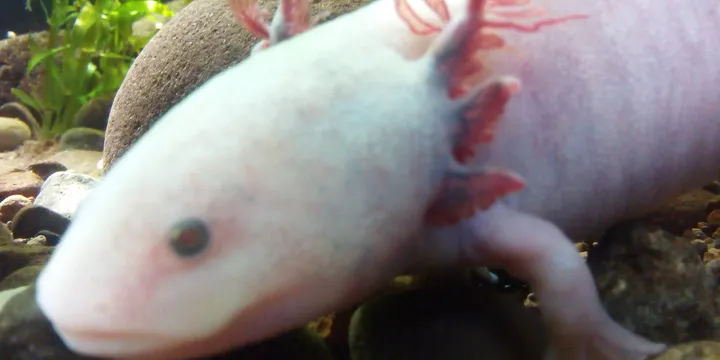
The pink axolotl is what people picture when they hear “axolotl.” Pale pinkish-white body, black bead eyes, and vivid pink-red feathery gills. Roughly 80% of axolotls sold online are this morph. If you’re picking your first axolotl, this is the one.
What “Leucistic” Means
Pink axolotls are technically called leucistic. The genetics:
- They produce normal amounts of one pigment (eumelanin in the eyes), which is why their eyes are black
- They produce reduced amounts of body pigments (xanthophores and melanophores in the skin), which is why the body is pale
- The pink color comes from blood circulation visible through translucent skin
- The bright pink-red gills are from blood vessels feeding the gill filaments
This is a recessive genetic trait. Both parents have to carry the leucistic gene for the offspring to be leucistic. Breeders pair known leucistic carriers to reliably produce leucistic babies.
Leucistic vs Albino: The Eye Test
People constantly mix these up. The fastest way to tell them apart:
| Trait | Leucistic | Albino |
|---|---|---|
| Body color | Pale pink/white | White or gold |
| Eye color | Black | Red or pink |
| Gill color | Bright pink-red | Bright pink-red |
| Light sensitivity | Normal | Higher (avoid bright lights) |
If the eyes are black, it’s leucistic. If the eyes are red, it’s albino. Both are pale, but they’re genetically different morphs.
Price Range: $25 to $400
Standard leucistic axolotls from reputable breeders cost $25 to $75. The variation depends on:
- Age: juveniles cheaper than adults
- Genetics quality: breeder reputation matters
- Geography: local pickup cheaper than shipping
- Quantity: some breeders offer pair discounts
Pet store prices are typically $60 to $100 for the same animal, often with worse genetics and a higher chance of parasites. Avoid pet store axolotls unless you’ve personally checked the conditions.
Designer leucistic variants:
- Piebald leucistic (dark patches on head): $150-400
- Mosaic leucistic (chimeric): $300+
- Heterozygous Galaxy axolotls (rare): $200-500
Why Leucistic Is Beginner-Friendly
Three reasons leucistic is the recommended first morph:
1. Water quality shows up visually. Pale axolotls show gill color and skin condition clearly. Faded gills usually mean ammonia or low oxygen. Red splotches mean ammonia burn. Color changes are an early warning system that’s harder to see on dark morphs.
2. Easiest to source. Every reputable axolotl breeder has leucistic stock. You won’t be on a wait list.
3. Most online resources reference them. When you Google “is my axolotl sick” and pull up symptom photos, 90% will be leucistic axolotls. Easier to match what you’re seeing.
Same Care as Any Axolotl
People often ask if pink axolotls need special care because of their color. They don’t. Standard axolotl care applies:
- Tank: 20 gallons long minimum, 40 gallon breeder recommended
- Water temperature: 60-68°F (16-20°C)
- Filter: Sponge filter on air pump, or HOB/canister with pre-filter sponge
- Substrate: Bare bottom or fine sand only
- Cycling: 4-6 weeks BEFORE the axolotl arrives
- Food: Earthworms (staple), sinking pellets (backup), blackworms (treat)
- Tankmates: None, ever
- Lighting: Low or none
Full setup details in our tank setup guide.
Common Leucistic-Specific Questions
Will my leucistic axolotl get darker as it ages? Slightly. Most leucistic axolotls develop very pale freckling on their head and back over the first year. They stay predominantly pink.
Why are the gills more red on some leucistic axolotls? Brighter gills usually mean better water oxygenation. If your axolotl’s gills are pale or “stubby,” check water parameters and increase air pump output.
Are leucistic axolotls more sensitive to light? Slightly more than wild type, much less than albino. Standard ambient room light is fine. Avoid direct bright lighting on the tank.
Can I breed two leucistic axolotls? Yes, but axolotl breeding is not for beginners. Eggs hatch into 1000+ larvae that need live baby brine shrimp three times a day. Most accidental breeders end up rehoming the babies or worse.
Buying a Leucistic Axolotl
Reputable sources:
- Breeders on r/axolotls who post their setups
- Axolotl Planet (Dallas, TX) for shipped axolotls
- Local breeders found through axolotl Facebook groups
- IvyAxolotls, Axolotl Sanctuary, Capalaba Aquarium (Australia readers)
Red flags:
- “Mini axolotl” sold under $20 (likely a sick juvenile)
- Pet store with cloudy water and stressed axolotls
- Sellers who don’t know the genetics
- Anyone selling axolotls under 4 inches without proper baby setup advice
Bottom Line
The pink leucistic axolotl is the easiest first axolotl to source, care for, and read for health signs. Expect to pay $25-75 from a reputable breeder, set up the tank 4-6 weeks before the axolotl arrives, and follow standard axolotl care. See the start here guide for the full beginner walkthrough.
Newsletter
The weekly axolotl note.
One honest care note, one Amazon find, one beginner question answered. Sundays. No spam.
Disclosure: The Axolotl Guide is a participant in the Amazon Services LLC Associates Program, an affiliate advertising program designed to provide a means for sites to earn advertising fees by advertising and linking to Amazon.com. As an Amazon Associate we earn from qualifying purchases, at no extra cost to you.
More Morphs & Colors Guides
Axolotl Regeneration: What They Can and Can't Regrow
Axolotls can regrow limbs, tails, eyes, parts of the brain and heart. They can't regrow what they've never lost. Here's the full scientific picture of axolotl regeneration.
Are Axolotls Fish? (No, And Here's Why That Matters)
Axolotls aren't fish. They're amphibians (specifically salamanders). The difference matters enormously for how you keep them. Here's the science.
Are Axolotls Nocturnal? (What They Actually Do at Night)
Axolotls are crepuscular, not strictly nocturnal. They're most active at dawn and dusk, active at night, and rest during the day. Here's the full activity pattern.