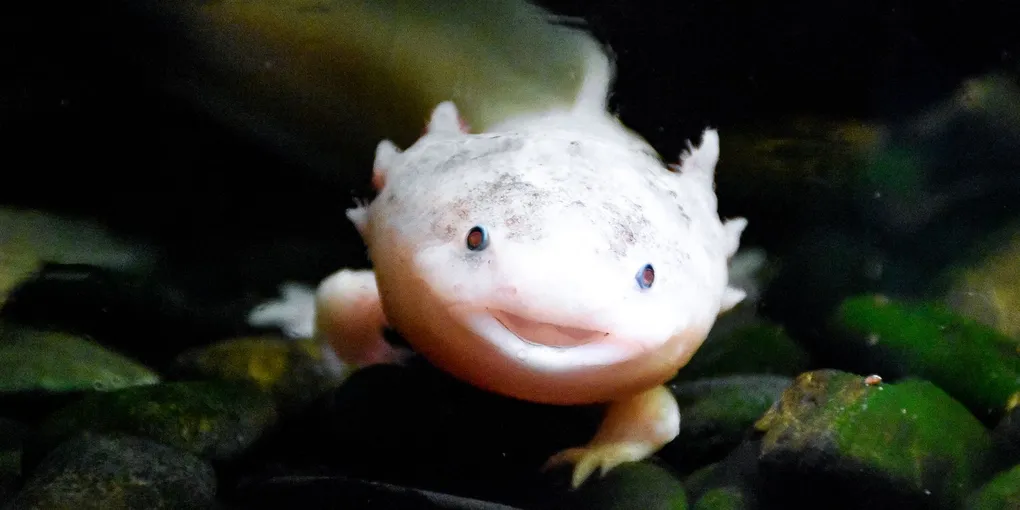
Do Axolotls Bite? (Yes, And Here's What That Means For You)
Axolotls bite anything that looks like food, including your fingers. The good news: axolotl bites are harmless to humans. The bad news: their bites cause real damage to other axolotls.
The short answer: yes, axolotls bite — but their bites are harmless to humans and devastating to other axolotls. Understanding axolotl biting behavior tells you everything you need to know about handling them, keeping them with tankmates (don’t), and feeding them safely.
Do Axolotls Have Teeth?
Yes. Lots of them. An adult axolotl has hundreds of tiny conical teeth arranged in rows along both jaws. Each individual tooth is so small you can barely see it without magnification, but together they create a sandpaper-like grip surface.
The teeth point inward, toward the throat. This is by design. Axolotls swallow prey whole by gripping it and using the inward-curving teeth to walk the food backwards into their stomach. They can’t chew. They’re built to strike, grip, and gulp.
These teeth are sharp enough to grip a worm but not strong enough to penetrate human skin. The bite force is also minimal — axolotl jaws are designed for gripping soft-bodied prey, not crushing or tearing.
Why Axolotls Bite
Axolotls bite for one reason: they think something is food. They’re ambush predators with terrible eyesight, and they navigate the world by detecting movement and chemical signals. Anything that moves near their face triggers a strike reflex.
Things they will strike at:
- Worms, pellets, brine shrimp (correct — this is food)
- Fingers in the tank
- Feeding tongs
- Air bubbles from the filter
- Other axolotls’ gills, tails, and legs
- Substrate kicked up by movement
- Reflections on the tank glass
- The siphon during water changes
There’s no aggression involved. Axolotls don’t bite to defend territory or assert dominance. They bite because something moved and might be edible. They confirm whether it’s actually food by attempting to swallow it.
What an Axolotl Bite Feels Like to a Human
A bit like being pinched by a baby’s gums. You’ll feel a sudden grip, surprise, and then release once the axolotl realizes you’re not food.
What it does NOT feel like:
- A cat bite (no penetration)
- A dog nip (no pressure)
- A fish bite (no teeth contact)
- A snake strike (no fangs)
Axolotl bites genuinely don’t hurt. They sometimes startle you, which is the bigger reaction. If your axolotl bites you and you flinch hard, the axolotl is more upset by the sudden movement than you are by the bite.
Should You Put Your Hand in the Tank?
Avoid it when possible. Not because the bite hurts, but because:
- Bacteria from your skin can damage the axolotl’s slime coat
- Soap residue, lotion, or sanitizer on your hands is toxic to the axolotl
- Sudden movement stresses the axolotl
- The axolotl bite reflex can break its own teeth on something hard or unyielding
If you must reach into the tank (cleaning, moving decor, emergency capture), rinse your hands thoroughly with hot water only (no soap), and move slowly. Use feeding tongs to maintain distance during feeding. The shop page has tongs for this exact purpose.
When Axolotls Bite Each Other
This is the actual problem with axolotl biting. In a tank with multiple axolotls, they constantly mistake each other’s gills, tails, and legs for prey.
What gets bitten:
- Gills — most commonly damaged. Axolotls strike at the bushy, feathery, moving gills of other axolotls. Wounded gills often regrow but take weeks and can get infected during recovery.
- Toes and feet — axolotls walking past each other strike at the moving toes. Toes regrow but are visibly stubby for months.
- Tails — partial tail amputation happens regularly in shared tanks. Tails regenerate but the new tail is often misshapen.
- Entire limbs — yes, axolotls can and do bite off other axolotls’ legs. Limbs regenerate but the process takes 6-12 weeks and the new limb is often slightly smaller than the original.
This is why axolotls should live alone. One axolotl per tank. No exceptions. The species is naturally solitary in the wild and tolerates conspecifics only briefly during breeding.
For more on what tankmates are safe (spoiler: very few), see the tankmate compatibility guide.
Hand-Feeding Without Getting Bitten
If you want to hand-feed for bonding or to ensure your axolotl is eating, use these techniques:
- Use feeding tongs, not your fingers. The 6-8 inch metal tongs keep your hand out of strike range.
- Drop food directly in front of the snout — about 1 inch away. The axolotl strikes forward.
- Wait until the food is taken before pulling the tongs back, so the axolotl doesn’t strike at the moving tongs.
- Don’t dangle food — drop it. Dangling triggers the strike reflex repeatedly.
- Switch out worms with tongs, never fingers. Live earthworms wiggle, axolotls strike, fingers get gripped.
After a few weeks of consistent tong-feeding, many axolotls associate the tongs with food and become more responsive at feeding time.
What If My Axolotl Bites Me?
Three things to know:
- Don’t yank away — sudden movement can damage the axolotl’s mouth and break its tiny teeth. Hold still for 2-3 seconds. The axolotl releases on its own once it realizes you’re not food.
- Don’t worry about disease — axolotls don’t carry diseases that transmit to humans through bites. Wash the area with regular soap and water after.
- Adjust your future behavior — your hand should be out of the tank as much as possible. Use tongs, nets, and siphons for everything else.
Behavior That’s Not Biting (But Looks Like It)
A few axolotl behaviors look like biting but aren’t:
Gulping at the surface
The axolotl swims up, opens its mouth at the water surface, and gulps air. This is normal respiration — axolotls have lungs and breathe air occasionally. Not biting.
Yawning
Axolotls “yawn” (open their mouths wide for several seconds) for unknown reasons. Possibly stretching the jaw, possibly clearing the gills. Not biting.
Gaping at food without striking
Sometimes an axolotl will open its mouth toward food but not actually strike. This is hesitation, not aggression. Usually because the food is too large, the axolotl is full, or the axolotl is mildly stressed.
Striking the glass
An axolotl that strikes at its own reflection or at food outside the tank is bumping the glass with its open mouth. This is normal but indicates the axolotl is hungry and over-stimulated. Cover one side of the tank if it’s persistent.
The Bottom Line
Axolotls bite anything that looks like food, including fingers, but their bites are harmless to humans. The real danger is in tanks with multiple axolotls, where bite injuries are common and serious. One axolotl per tank, always. Use feeding tongs to maintain distance. Don’t worry about an occasional accidental bite while you’re cleaning the tank.
If you want to bond with your axolotl, the best approach is consistent feeding from the same spot, slow movement near the tank, and dim lighting. Over time the axolotl will recognize your routine and become more responsive. But it will still bite the tongs.
For more on safe handling, the start here walkthrough covers daily care. For the gear that makes hands-off care possible, see the shop page.
Newsletter
The weekly axolotl note.
One honest care note, one Amazon find, one beginner question answered. Sundays. No spam.
Disclosure: The Axolotl Guide is a participant in the Amazon Services LLC Associates Program, an affiliate advertising program designed to provide a means for sites to earn advertising fees by advertising and linking to Amazon.com. As an Amazon Associate we earn from qualifying purchases, at no extra cost to you.
More Health & Behavior Guides
Are Axolotls Nocturnal? (What They Actually Do at Night)
Axolotls are crepuscular, not strictly nocturnal. They're most active at dawn and dusk, active at night, and rest during the day. Here's the full activity pattern.
Axolotl Fungus (Saprolegnia): How to Recognize and Treat It
White cotton-like growth on axolotls is Saprolegnia fungus. Catch it early and salt baths cure it in 5-7 days. Here's the complete treatment protocol.
How Big Do Axolotls Get? (Size Chart by Age)
Adult axolotls reach 9-12 inches on average, with exceptional individuals hitting 14-18 inches. Here's the full growth chart by age, what affects size, and the size most pet axolotls actually reach.